Malagasy culture : 5 essential customs to know before you arrive
Madagascar, a vast island with African, Asian and European influences, boasts a rich and unique culture shaped by its history and the diversity of its people. To get the most out of your trip, it is essential to understand local customs, the way of life and local beliefs so that you can interact more effectively with the locals and respect their traditions.
Here is a comprehensive guide to delving into the heart of Malagasy culture and discovering what makes this island so fascinating.
A people with diverse origins
One of Madagascar’s distinctive features is its unique cultural mix. The Malagasy people are mainly descended from Austronesian peoples who came from Indonesia and Malaysia, as well as from African peoples from the east coast. This dual influence is reflected in the language, traditions and even the architecture of traditional houses.
The 18 ethnic groups of Madagascar: The island is home to 18 ethnic groups, each with its own customs and dialects. Among the best known are:
- The Merina: a people of the Highlands who have historically been dominant.
- The Betsileo: renowned for their rice farming and their terraced rice fields.
- The Vezo: a seafaring people who specialise in fishing from canoes.
- The Antandroy: inhabitants of the arid south, proud of their warrior traditions.
It is worth noting that, despite this ethnic diversity, all Malagasy people share a common language, ‘Malagasy’, although it is spoken in several dialects depending on the region.
Crafts: A tradition of ancestral skill
Each region has its own speciality, often linked to its natural resources and local history :
- Zafimaniry art: Wood carving (doors, shutters) listed as a UNESCO World Heritage Site.
- Wild Silk (Lamba Landy): A traditional weaving technique used for shrouds and ceremonial garments.
- Antaimoro paper: Handcrafted paper inlaid with dried flowers, a legacy of the early Arab migrations.
Tip: Try to buy directly from local craftspeople in the villages to support the local economy and ensure authenticity.
Les valeurs fondamentales de la société Malgache
Malagasy culture is rooted in deep-seated values of respect, unity and family traditions.
1. Respect for Ancestors (Fihavanana and Famadihana)
Fihavanana is a core value that signifies solidarity, mutual support and respect for elders. The extended family plays a central role in social life, and important decisions are often taken collectively.
One of the most striking rituals is the Famadihana, or ‘turning of the dead’:
- This is a funeral ceremony in which the ancestors are exhumed, wrapped in new shrouds and honoured by the family with music and dancing.
- This ritual serves to strengthen the bond between the living and the dead, as ancestors are regarded as protectors.
Please note: If you are invited to a Famadihana ceremony, show respect and a spirit of friendly curiosity, but do not take photographs without permission.
2. Beliefs and the Role of Spirits
Spirituality plays an important role in the lives of the Malagasy people. Animism, Christianity and ancestral beliefs coexist, giving rise to a wide variety of religious practices.
- Ancestors and Guardian Spirits: Many Malagasy people believe in the presence of the razana (ancestral spirits) who guide and protect their descendants.
- The Ombiasy (diviners and healers): They act as mediators between humans and spirits, practising traditional medicine and performing sacred rituals.
- Prohibitions (Fady): These are cultural taboos, often linked to religion and ancestors, which vary from region to region.
Essential to observe: Certain fady may prohibit pointing at a grave, eating a specific food or touching certain objects. If you visit a village, always ask the locals if there are any local taboos.
La vie quotidienne et le mode de vie Malgache
1. Traditional Housing
Houses vary from region to region:
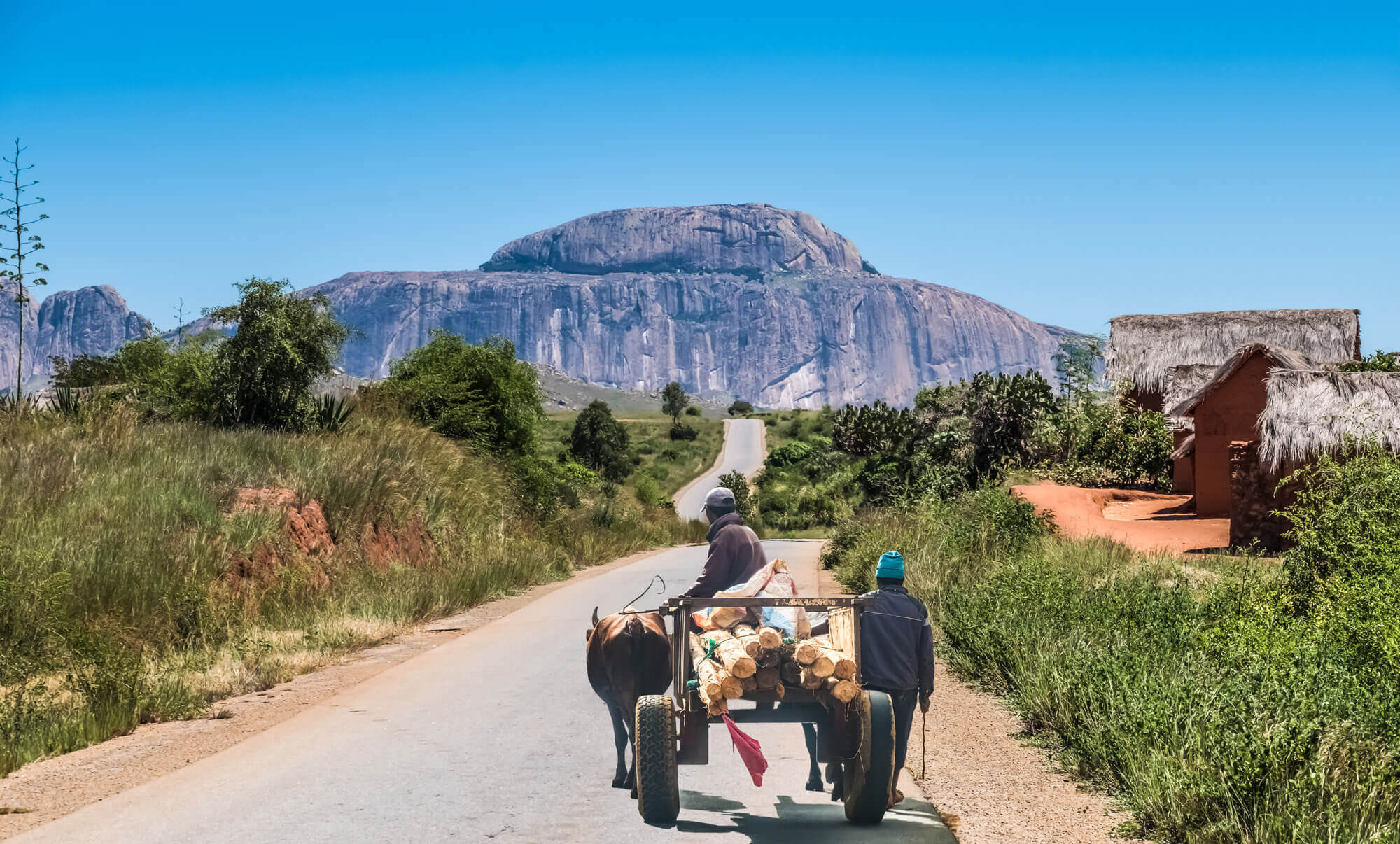
- In the Highlands: houses built of red mud bricks, often two-storey.
- On the coast: wooden and Ravenala huts, suited to the tropical climate.
- In the arid south: huts made of reeds or cactus branches.
Villages are often organised around the ‘Zoma’ market (a weekly market), a hub of community life and trade.
If you are staying with a local family, take your shoes off before going inside, especially if the floor is covered with raffia mats.
2. Malagasy cuisine: A way of life
Malagasy cuisine is simple but tasty, based on rice, meat, vegetables and spices.
Traditional dishes to try:
- Vary amin’anana :: rice with brèdes (green leaves), often served for breakfast.
- Romazava: a meat broth simmered with greens.
- Ravitoto: pounded cassava leaves with pork.
- Coconut fish: a fragrant and delicious coastal speciality.
Please note: Rice is sacred in Madagascar, and it is considered rude to waste it.
3. Gestures and social norms
Social interaction is important, and there are certain things you should be aware of:
- The traditional greeting: A handshake, often accompanied by a warm smile.
- Respect for the elderly: We address older people in a respectful manner, and it is frowned upon to turn your back on them abruptly.
- A smile is universal: the people of Madagascar value politeness and kindness.
Avoid turning down a gift or an invitation, as this may be misinterpreted as a lack of respect.
The Art of Hospitality: The Fandraisana olona
1. A reception that varies from region to region
In Madagascar, the arrival of a visitor is a major social event. The way in which you are welcomed reflects the spirit of each region:
- In the Highlands: The welcome is a solemn affair and involves the Kabary (a traditional speech). It is a moment of eloquence in which the host honours your presence with poetic words.
- On the coast and in the south: The welcome is warm and festive. You’ll often be welcomed to the rhythm of the Salegy or local dances led by the women of the village.
- In rural areas: Hospitality comes naturally. You will first be offered water or coffee, followed by an invitation to join the family for a meal.
Fandraisana olona is not merely a form of politeness; it is the putting into practice of Fihavanana (the sacred bond of solidarity).
2. How can we adapt to this welcome?
The traveller is not merely a spectator, but an active participant in fostering a friendly atmosphere. Here are some good habits to adopt:
- When speaking to a Kabary: Listen respectfully without interrupting. At the end, a simple ‘Misaotra’ (thank you) accompanied by a nod of the head is very much appreciated.
- When it comes to dancing: If you’re invited to join the circle, don’t hesitate! Taking a few steps, however clumsy, is seen as a sign of openness and respect.
- When invited: Don’t be in a hurry. Malagasy hospitality takes its time. Agreeing to sit down and have a chat is more important than any material gift.
Good to know: A smile is still your best asset. It breaks the ice instantly, regardless of any language barrier.
3. Sharing a meal: A sacred act
The guest is often given the ‘lion’s share’ or the place of honour at lunch.
- The welcome rice: You will often be served a generous plate of rice. It is customary to eat at least some of it to honour your host.
- Table manners: Wait until the eldest person or the head of the family starts eating or explicitly invites you to do so by saying ‘Mazotoa homana’.
Avoid flatly refusing an offer of food; if you cannot eat, explain this politely by saying “Misaotra” (No, thank you!).
Celebrations and festivals not to be missed
Madagascar comes alive with a host of traditional festivals:
- The Malagasy New Year (“Alahamady Be”): Celebrated in March, it is a time for family gatherings and rituals honouring the ancestors.
- The Donia Festival (Nosy Be): A major music festival showcasing Malagasy and African culture.
- Le Savika (Ambositra): A traditional rodeo show in southern Madagascar, where men take on zebu cattle.
- The Pirates’ Festival (Sainte-Marie): A festive event that commemorates the history of the pirates who once lived on the island.
If you’re travelling during a festival, take part with respect and curiosity – it’s a brilliant opportunity to get to know the locals.
Le malgache en quelques mots
Learning a few words is the best way to break the ice. The Malagasy people are very appreciative of this gesture of courtesy.
- Salama! ( Hello) : The universal greeting to use with a smile, whatever the time of day.
- Misaotra betsaka (Thank you very much) : Gratitude is a cornerstone of local solidarity (Fihavanana).
- Azafady ( Please / Sorry) : The magic word for politely addressing someone or apologising.
- Tsara be! (Very good / Wonderful): Used to express great satisfaction or to admire something.
- Mazotoa homana! (Enjoy your meal): To be said before starting a meal (literally ‘be keen to eat’).
- Mora Mora (Gently) : More than just an expression, it’s a way of life and a way of taking your time on the island.
- Veloma! ( Goodbye): Literally ‘take care / stay alive’, said when leaving.
Key points to remember
Aurélien M.
Local agent
Madagascar is much more than just a tourist destination: it is an island where traditions and beliefs shape everyday life. By taking the time to understand and respect these values, you will enrich your trip and enjoy an authentic and immersive experience.
Our tips for travelling responsibly:
- Respect local taboos and beliefs.
- Share moments with the locals whilst remaining humble and curious.
- Adopt a caring and open-minded attitude.
- Learn a few words of Malagasy (a simple ‘Misaotra’ – thank you – is always appreciated!).