



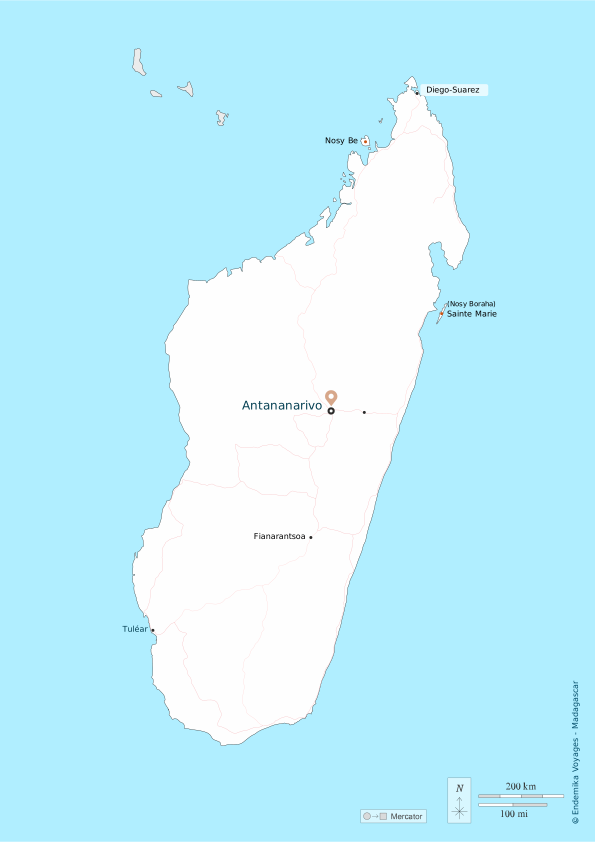
Geographically speaking, where is that?
Madagascar is situated in the Indian Ocean, to the east of Mozambique. Stretching nearly 1,600 km in length and 580 km in width, it is the fourth-largest island in the world. Situated between the equator and the Tropic of Capricorn, it offers a unique diversity of climates, ecosystems and landscapes. From the central highlands to the tropical coastlines, each region reveals a varied and spectacular landscape.
Malagasy Origins & Culture
With its Asian and African roots, Malagasy culture is expressed through 18 ethnic groups rich in tradition. The Vezos, nomadic fishermen, and the Mikea, the last forest gatherers, embody a way of life close to nature. An immersion amongst these peoples reveals the unique soul of Madagascar, characterised by ancestral rituals and hospitality.
Madagascan flora and fauna
Unique and exceptionally rich biodiversity , with around 90 per cent of the species found on the island being endemic . Iconic animals include lemurs, chameleons and the fossa, whilst the flora is dominated by majestic baobabs and numerous species of orchids.
What is there to see in Madagascar?


When is the best time to visit Madagascar?
Depending on the season, festivities or activities
Best times
We recommend visiting between May and October to avoid cyclones.


Updated on · by the Endemika team, 10 years of travelling on the Big Island
1. Hiking and trekking in Madagascar: from May to October
The best time for hiking and trekking in Madagascar is from May to October, during the dry season: the trails are accessible, the skies are clear and temperatures are pleasant during the day. In Isalo National Park, its sandstone canyons, natural pools and oases can be explored on foot over one or more days. In the Andringitra Mountains, the ascent of Pic Boby (Imarivolanitra, 2,658 m), the country’s second-highest peak, takes 2 to 3 days and involves camping.
Good to know: in June, July and August, night-time temperatures at high altitudes can drop to around 0 °C in the Andringitra: make sure you bring a warm sleeping bag. To avoid the heat in the south, May–June and September are the most comfortable months for hiking.
2. Scuba diving and snorkelling: from May to November
Dive into Madagascar’s crystal-clear waters from May to November to discover dazzling coral reefs and exceptional marine life around Nosy Be, Nosy Tanikely and Sainte-Marie Island. In the south-west, Ifaty and Anakao, near Tulear, offer calm waters that are ideal for beginners.
Nautical almanac: the humpback whales can be seen from July to September (Sainte-Marie, Nosy Be), turtles all year round, and the whale sharks are found in the waters off Nosy Be fromOctober to December. For the best visibility underwater, aim for September to November.
3. National parks and nature reserves: when is the best time to spot lemurs?
Explore Madagascar’s national parks and nature reserves from May to October to enjoy the best conditions for hiking and wildlife watching. The Tsingy of Bemaraha, a UNESCO World Heritage Site, are generally only accessible during the dry season, as the tracks become impassable during the rainy season. Marojejy National Park forms part of the Atsinanana rainforests, which are also listed by UNESCO.
The best time for wildlife: in September–October, when many female lemurs are carrying their young (Andasibe, Ranomafana, Isalo), the chameleons and reptiles become active again as the weather warms up, and the jacaranda trees are in bloom in the Highlands . It is also the ideal season to visit the Avenue of the Baobabs in Morondava.
4. Sainte-Marie Whale Festival : in July
Established in 2015, the Whale Festival takes place every year in July in Sainte-Marie (Nosy Boraha), when humpback whales arrive from the Antarctic to breed and give birth in the Sainte-Marie Channel. The 9th edition took place from 11 to 19 July 2026, with a programme focusing on Malagasy culture: traditional dances such as the morengy, concerts, a carnival and ‘Festival Nights’.
Also on the programme: whale-watching safaris, exploring the natural pools in the north of the island and Île aux Nattes, and initiatives to raise awareness of cetacean conservation. Outside the festival, whale-watching is still possible until September, and sometimes into early October.
5. Sômarôho Festival in Nosy Be: early August
The Sômarôho Festival, launched by the artist Wawa, is now the major musical event of Nosy Be. It takes place every year early August at the stage ofAmbodivoanio, in Hell-Ville, and celebrated its 13th edition in 2026. Opening carnival, concerts by salegy, artists from the Indian Ocean and international headliners: it attracts between Between 100,000 and 150,000 festival-goers.
Travel tip: during the festival, hotels in Nosy Be are often fully booked and the ferry crossing from Ankify harbour is very busy. Book your accommodation several months in advance. The famous Donia Festival, formerly held at Pentecost, has given way to Sômarôho as the main festival on the ‘Island of Perfumes’.
6. Vez’tival in Tulear: Vezo culture in autumn
The Vez'tival celebrated every year in Tuléar (Toliara) the culture of the people Vezo, nomadic fishermen of the South-west of Madagascar. Organised by the association Vavea, it is usually held late October over three days; the 2025 event has been postponed to 28–30 November. Please remember to check the dates before booking.
On the programme: a carnival in traditional dress, outrigger canoe races between Sarodrano (Saint-Augustin) and Tulear, moraingy (traditional boxing), traditional wrestling, rickshaw races and concerts. A wonderful opportunity to combine the festival with the beaches of Ifaty and Anakao and an exploration of the thorn forest of the Far South.
Choosing the right month
Calendar
Madagascar month by month
Weather, activities and highlights: see at a glance the best time to visit the Big Island, depending on what you’d like to experience.
| Activity | Jan | Feb | Tue | Apr | May | June | July | August | Sep | Oct | Nov | Dec |
|---|---|---|---|---|---|---|---|---|---|---|---|---|
| Weather: dry season / rainy season | Jan : Not recommended | Feb: Not recommended | Tue: Possible | Apr : Good | May: Ideal | June : Ideal | July: Ideal | August: Ideal | Sep : Ideal | Oct : Ideal | Nov: Good | Dec: Possible |
| Hiking in Isalo, Andringitra and Makay | Jan : Not recommended | Feb: Not recommended | Mars : Not recommended | Apr : Good | May: Ideal | June : Ideal | July: Ideal | August: Ideal | Sep : Ideal | Oct : Good | Nov : Possible | Dec : Not recommended |
| Diving in Nosy Be, Ifaty and Sainte-Marie | Jan : Possible | Feb: Not recommended | Tue: Possible | Apr : Good | May: Ideal | June : Ideal | July: Ideal | August: Ideal | Sep : Ideal | Oct : Ideal | Nov : Ideal | Dec: Good |
| Humpback whales, Sainte-Marie, Nosy Be | Jan : Not recommended | Feb: Not recommended | Mars : Not recommended | Apr : Not recommended | May : Not recommended | June : Not recommended | July: Ideal | August: Ideal | Sep : Ideal | Oct : Possible | Nov: Not recommended | Dec : Not recommended |
| Whale sharks, Nosy Be | Jan : Not recommended | Feb: Not recommended | Mars : Not recommended | Apr : Not recommended | May : Not recommended | June : Not recommended | July: Not recommended | August: Not recommended | Sep: Possible | Oct : Ideal | Nov : Ideal | Dec: Good |
| Lemurs & baby animals in Sept–Oct. | Jan : Possible | Feb : Possible | Tue: Possible | Apr : Good | May : Good | June: Good | Jul: Fine | August : Good | Sep : Ideal | Oct : Ideal | Nov : Ideal | Dec: Good |
| Tsingy de Bemarahawestern slopes | Jan : Not recommended | Feb: Not recommended | Mars : Not recommended | Apr: Possible | May: Ideal | June : Ideal | July: Ideal | August: Ideal | Sep : Ideal | Oct : Ideal | Nov: Good | Dec : Not recommended |
| Festivals – Highlights | Independence | Whale Festival | Sômarôho | Vez’tival |
-

Month: 1 January
Not recommendedWhere to go Tuléar & Ifaty 32° / 26°Sea 29°
- Crowds
- Low
- Return flight to Paris
- ≈ 920 €
The rainy season is underway in the east and north, with a risk of cyclones. The south-west remains the driest region.
Make sure you leave a few days’ leeway in your itinerary.
-

Month: 2 February
Not recommendedWhere to go Fort-Dauphin 30° / 24°Sea 27°
- Crowds
- Low
- Return flight to Paris
- ≈ 900 €
The peak of the cyclone season; tracks in the west are cut off. The far south has been spared.
Stick to the tarmac roads and head south.
-

Month : 3 March
PossibleWhere to go Morondava & Baobabs 32° / 26°Sea 30°
- Crowds
- Low
- Return flight to Paris
- ≈ 810 €
The rainy season is over, but cyclones are still possible at the start of the month. The cheapest flight of the year.
The Tsingy are not yet accessible.
-

Month: 4 April
Very goodWhere to go Isalo & RN7 27° / 17°
- Crowds
- Average
- Return flight to Paris
- ≈ 980 €
The dry season is setting in, but nature is still lush. Easter holidays in France.
The parks are green and still quiet.
-

Month: 5 May
IdealWhere to go Morondava & Tsingy 30° / 23°
- Crowds
- Average
- Return flight to Paris
- ≈ 830 €
The start of the dry season, with mild days. An excellent balance of weather, price and visitor numbers.
Ideal for a first trip to Madagascar.
-

Month: 6 June
IdealWhere to go Antsirabe & Andringitra 18° / 9°
- Crowds
- Average
- Return flight to Paris
- ≈ 890 €
Dry and sunny; cool nights in the Highlands, sometimes as low as 5 °C.
Make sure you pack a fleece for the evenings.
-

Month: 7 July
IdealWhere to go Sainte-Marie 24° / 21°Sea 25°
- Crowds
- Strong
- Return flight to Paris
- ≈ 1 270 €
Southern winter, clear skies. The arrival of the humpback whales and the European school holidays.
Peak season: book several months in advance.
-

Month: 8 August
IdealWhere to go Nosy Be 27° / 23°Sea 27°
- Crowds
- Strong
- Return flight to Paris
- ≈ 1 480 €
High season, dry; strong winds in the south and in Diego. The most expensive flight of the year.
Flights and hotels are filling up fast: book early.
-

Month: 09 September
IdealWhere to go Isalo & the South 29° / 15°
- Crowds
- Average
- Return flight to Paris
- ≈ 930 €
Dry weather, rising temperatures, golden light. The crowds are thinning out now that the new term has begun.
Lovely weather and fewer people than in August.
-

Month: 10 October
IdealWhere to go Morondava & Tsingy 31° / 24°Sea 28°
- Crowds
- Average
- Return flight to Paris
- ≈ 1 090 €
Hot and dry, with clear skies; the first showers towards the end of the month. All Saints’ Day holidays.
Ideal for combining sightseeing with a beach holiday.
-

Month: 11 November
Very goodWhere to go Diego & Nosy Be 30° / 25°Sea 27°
- Crowds
- Low
- Return flight to Paris
- ≈ 870 €
Hot weather; rain is set to set in towards the end of the month. Few travellers, falling prices.
It’s best to set off at the start of the month.
-

Month: 12 December
PossibleWhere to go Tuléar & Anakao 32° / 26°Sea 29°
- Crowds
- Average
- Return flight to Paris
- ≈ 1 070 €
Rain is returning to most of the island. The south-west remains sunny. End-of-year festivities.
Opt for the South-West and beach holidays.
Temperatures: average maximum and minimum temperatures for the recommended destination. Flights: average return fare for Paris–Antananarivo, as recorded each month. Crowds: our teams’ estimate.
Choose your time of year based on both when you want to go and the weather.
Our guides’ notebook
- July – September
-
The famadihana in the Highlands
The season of turning the graves – a family ceremony which one may only attend by invitation and with due respect for the families.
- May — June
-
The rice harvest
It’s in full swing around Antsirabe and Ambositra: the best time to experience the daily lives of the villagers.
- May — Oct.
-
Workshops and overnight stays with local residents
Throughout the dry season, our trips include craft workshops and one or two nights’ accommodation with local families.
Frequently Asked Questions
Your questions about the best time of year
Short answers to the questions our travellers ask us most often before booking.
When is the best time to visit Madagascar?
The best time to visit is the dry season, from May to October. This avoids the cyclone season (January to March) and offers the best conditions for hiking, visiting national parks and wildlife spotting. September and October combine good weather, baby lemurs and fewer crowds than in July and August.
When should you avoid travelling to Madagascar?
Avoid January, February and March: this is the rainy and cyclone season, particularly on the east and north coasts. Some trails, such as the one to the Tsingy de Bemaraha, are impassable at this time of year.
When is the best time to see humpback whales in Madagascar?
From July to September, mainly in Sainte-Marie and Nosy Be. The Whale Festival takes place every year in July in Sainte-Marie. See the Sainte-Marie holiday package.
When is the best time to see whale sharks in Nosy Be?
Whale sharks are found in the waters around Nosy Be mainly from October to December. See the Nosy Be holiday package.
When is the best time to visit the Tsingy of Bemaraha?
During the dry season, usually from May to November. The tracks are often impassable during the rainy season. See the Tsingy & Baobabs tour.
What are the major festivals in Madagascar?
The Whale Festival in Sainte-Marie (July), the Sômarôho Festival in Nosy Be (early August) and the Vez’tival in Tulear (late October or November), which celebrates Vezo culture.
Fancy finding out more? Check out all our practical guides on Madagascar.


